

SunSPC – Swimming Pool Cleaner
SunSPC is a speciality version of calcium hypochlorite, manufactured specially for swimming pool use and different from regular calcium hypochlorite. 70% minimum available chlorine, no cyanuric acid, in a 25 kg drum, and it is at least 35–40% cheaper than TCCA.
- Pack size
- 25 kg drum
- Dispatch
- From Chennai stock, in as little as 1 business day for in-stock items
- Transport
- UN 1748, Class 5.1 oxidiser, PG II
- Price
- Quoted within 1 business hour, Mon–Sat 10:00–19:00
- At least 35–40% cheaper than TCCA
- Made for swimming pools
- Spec sheet and SDS
- Pool dose calculator
| Chemical name | Calcium hypochlorite |
|---|---|
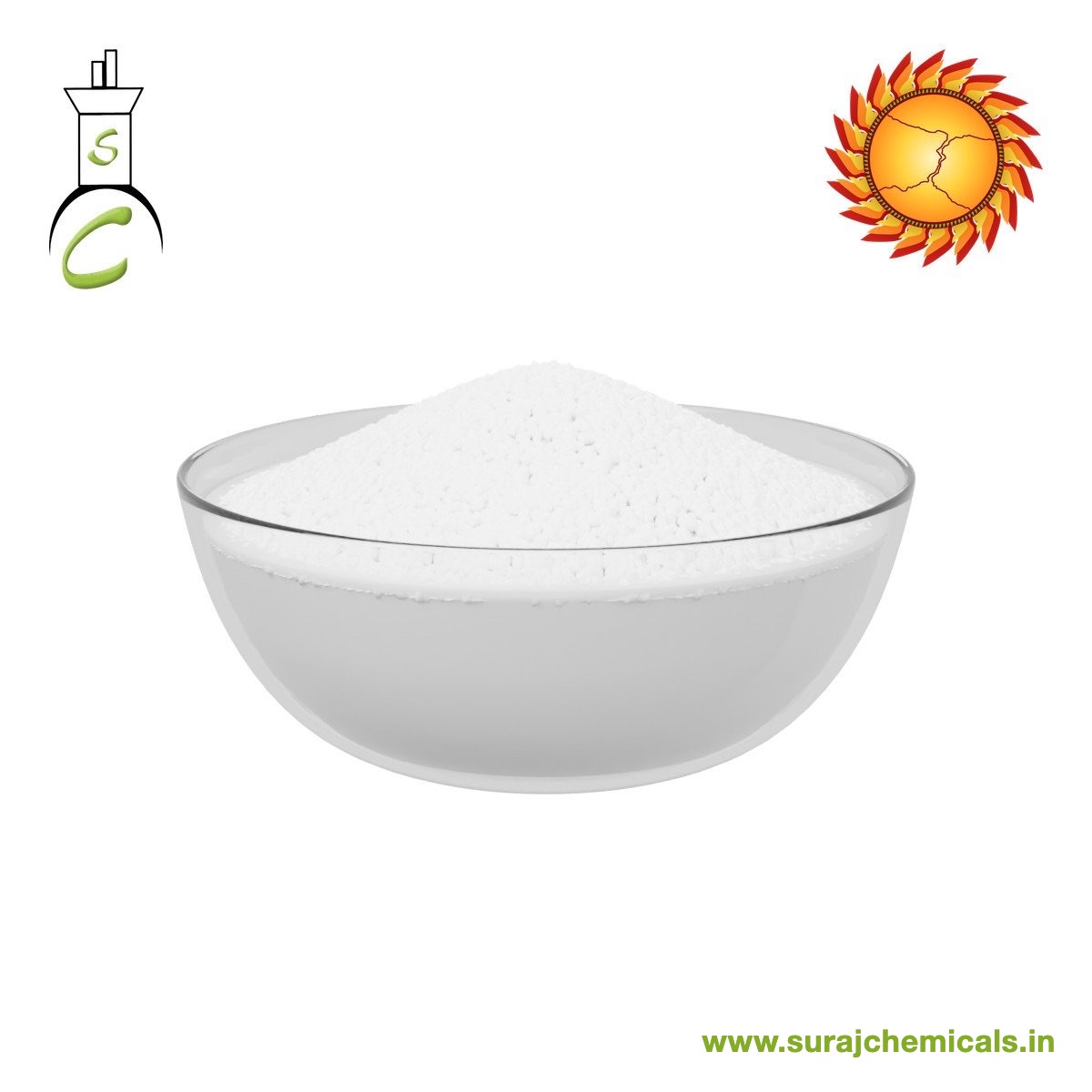
| Material description | White, fine, free-flowing granules |
| Available chlorine | 70.00 % min |
| Granule size 0.25 – 2.00 mm | 90.00 % min |
| Moisture | 0.30 % max |
| CAS number | 7778-54-3 |
| Transport | UN 1748, Class 5.1, PG II |
| Packaging | 25 kg drum |
| Storage guide | Use within 3 to 6 months of manufacture |
Documents
The brochure has the full dosing table, safe use and storage. Read the Safety Data Sheet before first use: SunSPC is a strong oxidiser.
Why pools choose SunSPC
SunSPC is a speciality version of calcium hypochlorite, manufactured specially for swimming pool use. It does the job of TCCA in your pool, without the problems that come with it, and it is at least 35–40% cheaper.
1. At least 35–40% cheaper than TCCA
This is the biggest benefit. SunSPC is at least 35–40% cheaper than TCCA, so a season of pool chlorine costs far less. Ask us for a quote and set it beside what you pay now. For a fair comparison, look at the cost per ppm of chlorine delivered, not the cost per kilogram.
2. A speciality grade made for swimming pools
SunSPC is different from regular calcium hypochlorite. It is a speciality version, manufactured specially for swimming pool use and supplied as white, fine, free-flowing granules to a clear specification: 70% minimum available chlorine, at least 90% of the granules between 0.25 and 2 mm, and 0.30% maximum moisture.
3. Nothing builds up, so your chlorine never gets “locked”
TCCA is a stabilised chlorine: every dose of TCCA leaves cyanuric acid (CYA) behind in the water. CYA does not break down and does not evaporate, so it climbs steadily through the season. Past a point it holds on to the chlorine and slows its germ-killing action, the effect operators call chlorine lock. The only real cure is to drain a large part of the pool and refill it.
SunSPC contains no cyanuric acid at all. There is nothing to accumulate, so the chlorine you add in the last week of the season works as hard as the chlorine you added in the first. You save the water, the time and the chemicals that a partial drain-and-refill costs.
4. Fast-acting chlorine, the moment you need it
SunSPC dissolves quickly in a bucket of water, and the chlorine is available as soon as the solution reaches the circulation. That makes it the right tool for routine daily chlorination, for shock treatment after a heavy bather load, a rain shower or an algae bloom, and for pulling a pool back quickly when free chlorine has dropped too low.
5. One product for daily dosing and shock
The same granules do both jobs, at different doses. That means one item to buy and store, one procedure for your staff to learn, and one dosing table on the plant-room wall. The brochure gives a ready formula and table, and the calculator on this page works out the dose for your pool.
6. Easier pH control
SunSPC has a mildly alkaline effect on the water, so it works with your pH balance and can reduce how often you need pH correction. You still test and adjust, but the water stays steadier between checks.
7. Strong, broad disinfection
Calcium hypochlorite is a powerful oxidiser. SunSPC kills bacteria, viruses and algae, and it breaks down the sweat, oils and other organic matter that bathers bring in, which is what causes most pool odour and eye irritation.
8. Clear water through the busy season
Hotels, apartments, clubs and schools see their heaviest use exactly when sun and heat burn chlorine fastest. Because SunSPC adds no stabiliser and acts quickly, you can answer a crowded weekend or a hot spell with an immediate top-up and keep the water clear.
9. Simple to handle and store
SunSPC comes in a 25 kg drum that is easy to stack, move and keep tightly closed, and it is sold on a clear specification sheet and Safety Data Sheet. Keep it cool, dry and shaded, apart from other pool chemicals, and use stock in rotation.
| SunSPC | TCCA | |
|---|---|---|
| Cost | At least 35–40% cheaper | Higher |
| Cyanuric acid build-up | None | Adds CYA with every dose |
| Speed of action | Fast; dissolves in a bucket | Slower; TCCA is sparingly soluble |
| Shock treatment | Same product, higher dose | Shocking adds a large dose of cyanuric acid |
| Effect on pH | Mildly alkaline | Strongly acidic; lowers pH and alkalinity |
How to dose SunSPC
- Dissolve the measured SunSPC in a bucket of clean water.
- Add the solution to the balance tank or overflow drain, never straight into the pool.
- Circulate with the pump and filter running, during and after dosing.
- Repeat when testing shows free chlorine has fallen to 1 ppm.
| Pool litres | 1 ppm | 2 ppm | 3 ppm | 5 ppm | 10 ppm (shock) |
|---|---|---|---|---|---|
| 20,000 | 29 | 57 | 86 | 143 | 286 |
| 50,000 | 71 | 143 | 214 | 357 | 714 |
| 100,000 | 143 | 286 | 429 | 714 | 1,429 |
| 200,000 | 286 | 571 | 857 | 1,429 | 2,857 |
| 500,000 | 714 | 1,429 | 2,143 | 3,571 | 7,143 |
| 1,000,000 | 1,429 | 2,857 | 4,286 | 7,143 | 14,286 |
Chlorine demand changes with sun, bather load and temperature, so dose by testing, not by habit. The full table, from 20,000 to 1,000,000 litres, is in the technical brochure.
SunSPC pool chlorine calculator
Formula from the SunSPC brochure: grams = pool litres × ppm rise ÷ 700 (700 = 1,000 × 0.70 available chlorine). Dissolve in a bucket, add to the balance tank or overflow drain with the pump running, and test before dosing again.
Safe use and storage
| Do | Test pH and chlorine before every dose and keep pH at 7.2 to 7.8. Dissolve fully in a bucket. Stir with a non-metallic stirrer. Wear gloves, goggles and protective clothing. |
|---|---|
| Don’t | Add water to the chemical (add the chemical to water). Throw granules into the pool. Overdose to skip a second dose. Dose when pH is out of range. |
| Never mix | With acids, ammonia, TCCA, other chlorine products or organic matter. Contact releases toxic chlorine gas and can cause fire. |
| Storage | Drum tightly closed, cool, dry and shaded, away from heat, flames, oils and organic material, apart from other pool chemicals, locked and out of children’s reach. |
| Hazards | Strong oxidiser (H271); harmful if swallowed (H302); severe skin burns and eye damage (H314, H318); respiratory irritation (H335); very toxic to aquatic life (H400, H410). |
| First aid | Skin or eyes: rinse with plenty of water for at least 15 minutes and get medical help. If swallowed, do not induce vomiting. |
| Fire or spill | Flood with large amounts of water only; no dry chemical, foam or CO₂. Keep spills out of drains. |
Need other pool chemicals as well? The full range is on surajchemicals.com.
SunSPC questions, answered
What is SunSPC?
SunSPC is a speciality version of calcium hypochlorite, manufactured specially for swimming pool use, from the Sun Brand range of Suraj Chemicals. It has at least 70% available chlorine, contains no cyanuric acid and comes in a 25 kg drum.
How is SunSPC different from regular calcium hypochlorite?
SunSPC is a speciality version of calcium hypochlorite, manufactured specially for swimming pool use. It is supplied as white, fine, free-flowing granules to a clear specification: 70% minimum available chlorine, at least 90% of the granules between 0.25 and 2 mm, and 0.30% maximum moisture.
How does the cost of SunSPC compare with TCCA?
SunSPC is at least 35–40% cheaper than TCCA. For a fair comparison, work out the cost per ppm of chlorine delivered rather than the cost per kilogram, and ask us for a quote.
Can SunSPC replace TCCA granules?
Yes, for most pools. SunSPC does the same disinfecting job without adding cyanuric acid, so nothing builds up over the season, and it is at least 35–40% cheaper than TCCA. SunSPC must always be dissolved in a bucket first and added through the balance tank or overflow drain.
How much SunSPC do I add?
SunSPC in grams = pool litres × ppm rise ÷ 700. A 100,000 litre pool that needs a 2 ppm rise takes about 286 g. Keep free chlorine at 1 to 3 ppm and test before every dose.
Can I use SunSPC for shock treatment?
Yes. The same granules handle daily chlorination and shock treatment after heavy bather load, rain or an algae bloom. Use the shock column of the dosing table only for shock treatment.
Does SunSPC change the pH?
It has a mildly alkaline effect, so it does not push pH down the way TCCA does. Keep pH between 7.2 and 7.8 and test and adjust either way.
How should SunSPC be stored?
Keep the drum tightly closed in a cool, dry, shaded place, away from heat, oils, organic material and other pool chemicals. Use stock in rotation, within 3 to 6 months of manufacture as a guide.
What must SunSPC never be mixed with?
Acids, ammonia, TCCA, other chlorine products or organic matter. Contact releases toxic chlorine gas and can cause fire.
How is SunSPC transported?
As UN 1748 (calcium hypochlorite, dry), Class 5.1 oxidiser, Packing Group II. CAS number 7778-54-3.
More from the range
SunSPC by city
Local notes on pool chlorine, delivery and dosing, city by city.