

Sunfloc Anionic MQ polyelectrolyte
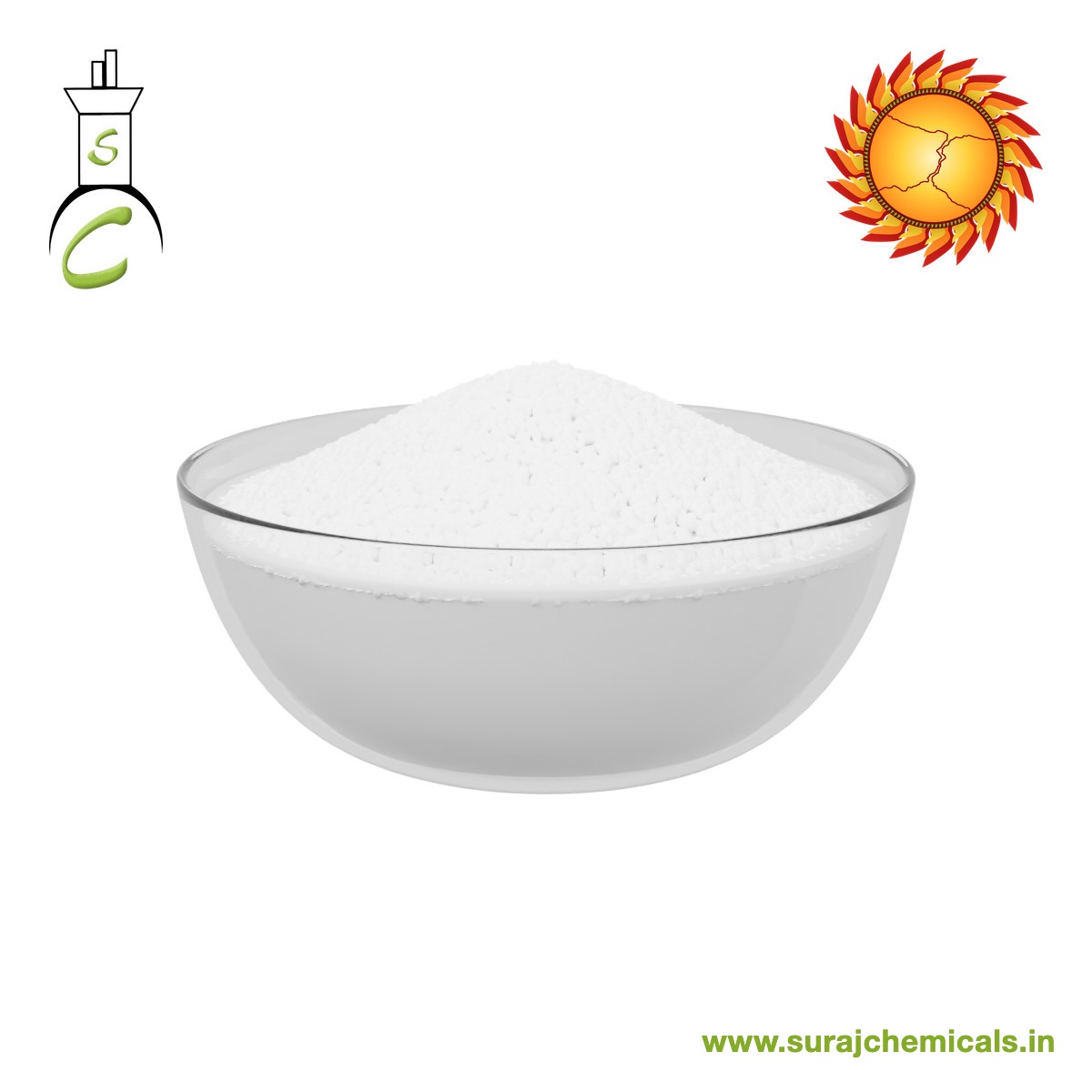
Anionic polyacrylamide flocculant, white granular solid, 10 kg bags, 24-month shelf life. Use it where metal-salt flocs or mineral solids need to settle faster: clarification after coagulation in ETPs and STPs, municipal clarifiers, paper and mineral processing.
- Pack sizes
- 10 kg bags; enquire for bulk quantities
- Dispatch
- From Chennai stock, in as little as 1 business day for in-stock items
- Minimum order
- Confirmed with your quote; depends on pack and grade
- Price
- Quoted within 1 business hour, Mon–Sat 10:00–19:00
- Manufactured by Suraj Chemicals
- ISO 9001:2015 certified
- Spec sheet and SDS
- Free jar test
| Ionic character | Anionic |
|---|---|
| Form | Granular solid |
| Colour | White |
| Major content | Polyacrylamide (CAS 9003-05-8) |
| Bulk density | 0.72 – 0.78 g/cc |
| pH | 7.4 – 7.6 (0.1% solution) |
| Maximum use concentration | 5 g/L |
| Shelf life | 24 months |
| Pack size | 10 kg bags |
HQ and MQ: HQ grades carry a full specification, including molecular weight, charge density, residual acrylamide, insolubles, particle size and viscosity, and come in 25 kg bags. MQ grades are specified on core parameters (bulk density, pH and maximum use concentration) and come in 10 kg bags.
Documents
Making it up and dosing
Dissolve in clean water at the recommended working strength, stirring gently for 45–60 minutes until fully dissolved, then dose through a pump. Start from the typical range in the dosing calculator and fix the dose by jar test.
Overview
Sunfloc Anionic MQ is a Sun Brand polyacrylamide flocculant manufactured by Suraj Chemicals, with a negative (anionic) charge. Anionic flocculants work best on positively charged and mineral particles, so this grade is used in mineral processing, clarification of process water and paper and textile applications, at working solutions up to 5 g/L. It is a white granular solid with a 24-month shelf life. For organic sludges, choose Sunfloc Cationic MQ.
Applications
- Flocculant for mineral processing
- Municipal and industrial water treatment
- Paper and textile industry applications
Which polyelectrolyte for your industry
- Anionic Negatively charged. Best on mineral and inorganic solids: metal hydroxides, clay, sand, scale.
- Cationic Positively charged. Best on organic and biological solids: activated sludge, fibre, oil and protein.
- Non-ionic No charge. Used where pH is low or a neutral polymer is needed; not in the Sunfloc range, ask us.
| Industry | Application and what the polymer does | PAM type | Sunfloc grade to trial |
|---|---|---|---|
| Sugar makingRead the guide | Sugar juice purificationSettles mud and colloids from limed cane juice in the clarifier | Anionic | Anionic HQ · MQ |
| Wastewater treatmentClarifies high-solids mill effluent before biological treatment | Anionic | Anionic HQ · MQ | |
| PharmaceuticalRead the guide | Wastewater treatmentFlocs biological sludge from aeration tanks and clarifiers | Cationic | Cationic HQ · MQ |
| Brewing & distilleryRead the guide | Wastewater treatmentSettles yeast and biological solids and helps dewater the sludge | Cationic | Cationic HQ · MQ |
| Textile & dyeingRead the guide | Wastewater treatmentGrows flocs from dye-bearing and biological sludge after coagulation | Cationic | Cationic HQ · MQ |
| Textile sizingForms a film on warp yarn to reduce breakage during weaving | AnionicorNon-ionic | Anionic HQ · MQNon-ionic: ask us | |
| Leather & tanneryRead the guide | Wastewater treatmentSettles chrome and protein solids after primary coagulation | Cationic | Cationic HQ · MQ |
| Oil refineryRead the guide | Wastewater treatmentGathers oily solids and emulsions so DAF units remove them | Cationic | Cationic HQ · MQ |
| MiningRead the guide | Wastewater treatmentSettles fine mineral solids so process water can be reused | Anionic | Anionic HQ · MQ |
| Tailings concentrationThickens tailings for a denser underflow and more water recovery | Anionic | Anionic HQ · MQ | |
| Industrial wastewater (ETP)Read the guide | Biological sludgeBridges organic sludge from aeration tanks and secondary clarifiers | Cationic | Cationic HQ · MQ |
| Physical & chemical treatmentBuilds large flocs after lime, alum or ferric dosing | Anionic | Anionic HQ · MQ | |
| Sludge dewateringConditions sludge for filter press, belt press or centrifuge | Cationic | Cationic HQ · MQ | |
| Municipal wastewaterRead the guide | Primary sludge treatmentImproves settling and thickening of raw sewage solids | Cationic | Cationic HQ · MQ |
| Secondary sludge treatmentThickens waste activated sludge before digestion or dewatering | Cationic | Cationic HQ · MQ | |
| Sludge dewateringReleases water from sludge on a belt press or centrifuge | Cationic | Cationic HQ · MQ | |
| Phosphate removalSettles the phosphate precipitate formed by alum or ferric salts | Cationic | Cationic HQ · MQ | |
| Oil extraction | Tertiary oil recovery (EOR)Thickens injection water so it pushes more oil from the reservoir | Anionic | Anionic HQ · MQ |
| Drilling fluid treatmentCoats cuttings and steadies shale in water-based drilling mud | Anionic | Anionic HQ · MQ | |
| Water shut-off (water-blocking agent)Forms a gel that seals off water-producing zones | Anionic | Anionic HQ · MQ | |
| Steel industryRead the guide | Wastewater treatmentSettles mill scale and iron oxide fines in scale pits and clarifiers | Anionic | Anionic HQ · MQ |
| Paper makingRead the guide | Retention of fillers & fibresHolds fillers and fines in the sheet on the wire | AnionicandCationic | Anionic HQ · MQCationic HQ · MQ |
| Paper strengthImproves dry strength and sheet formation | AnionicandCationic | Anionic HQ · MQCationic HQ · MQ | |
| Wastewater treatmentRecovers fibre and clarifies white water and mill effluent | Anionic | Anionic HQ · MQ | |
| Coal washing | Concentration & filtrationSpeeds filtration of fine coal concentrate | Anionic | Anionic HQ · MQ |
| Slime settlingSettles clay slimes in thickeners so wash water is reused | Anionic | Anionic HQ · MQ | |
| Wastewater treatmentClarifies wash water before recycle or discharge | Anionic | Anionic HQ · MQ | |
| Plastics industry | Wastewater treatmentSettles organic and pigment solids after coagulation | Cationic | Cationic HQ · MQ |
| Chemical industryRead the guide | Wastewater treatmentFlocs mixed organic sludge from biological stages | Cationic | Cationic HQ · MQ |
| Sewage treatment plants (STP)Read the guide | Wastewater treatmentSettles and dewaters sewage sludge in compact STPs | Cationic | Cationic HQ · MQ |
| Slaughterhouse | Wastewater treatmentSeparates fat, blood and protein solids, often in a DAF unit | Cationic | Cationic HQ · MQ |
Typical choices only. The right grade and dose depend on your water or sludge; we run a jar test on your sample before you order. Pick the charge first, then the family: HQ for a regular plant or a tender file, MQ for a smaller plant or a trial. HQ or MQ? · Grade selector · Jar test method
Buyer’s notes
Choosing the grade. Anionic MQ is the 10 kg-bag, medium-molecular-weight anionic polyacrylamide, a good first grade to trial on effluent and mineral slurries. Step up to the very-high-molecular-weight HQ grade when you need bigger, faster flocs on difficult solids.
What to check on the spec sheet. Ionic property (anionic), 0.1% solution pH (about 7.4-7.6), bulk density, maximum use concentration (5 g/L) and shelf life. A jar test on your own effluent will show the best dose.
Handling and storage. Disperse slowly into stirred water, never into a still tank, and allow full dissolution before dosing. Keep the bag closed and dry at 0-35 deg C.
Where it is used. Wastewater clarification, mineral processing, paper and textile effluent treatment.
Frequently asked questions
What is Sunfloc Polyelectrolyte Anionic MQ?
Sunfloc Polyelectrolyte Anionic MQ is manufactured by Suraj Chemicals as a white granular solid, identified by CAS number 9003-05-8. It is part of the Sun Brand range; the specification table on this page lists its full characteristics.
What is Sunfloc Polyelectrolyte Anionic MQ used for?
Typical applications include: Flocculant for mineral processing; Municipal and industrial water treatment; Paper and textile industry applications.
How should Sunfloc Polyelectrolyte Anionic MQ be stored and handled?
Store sealed in a cool, dry place away from moisture and direct sunlight (0 – 35 °C). Shelf life 24 months in the original unopened pack.
What packaging and pack sizes does Suraj Chemicals supply Sunfloc Polyelectrolyte Anionic MQ in?
10 kg bags. Please enquire for bulk quantities. Contact us if you need a different pack size, or a bulk/tanker quantity.
What is the shelf life of Sunfloc Polyelectrolyte Anionic MQ?
24 months from the date of manufacture in the original, unopened pack, stored sealed in a cool, dry place away from direct sunlight. As with any industrial chemical, request the current batch's manufacturing date and a fresh certificate of analysis for orders where exact remaining shelf life matters.
Is Sunfloc Polyelectrolyte Anionic MQ hazardous to handle?
Treat Sunfloc Polyelectrolyte Anionic MQ as a chemical to be handled with care: its hazards depend on the grade, concentration and use. Follow the storage guidance above, use appropriate PPE, avoid skin and eye contact and inhalation, and download the Safety Data Sheet (SDS/MSDS) in the sidebar above for full GHS hazard, handling and PPE details. Never mix it with other chemicals unless the SDS says it is compatible.
Is a Specification Sheet, TDS or MSDS available for Sunfloc Polyelectrolyte Anionic MQ?
Yes — a downloadable Specification Sheet (PDF) with full characteristics and specifications is available above, and a downloadable Safety Data Sheet (SDS/MSDS) for Sunfloc Polyelectrolyte Anionic MQ is also available above.
Can I get a sample or discuss order quantity for Sunfloc Polyelectrolyte Anionic MQ?
Yes — use the Request Price & Availability button or WhatsApp us with your required quantity, and our team will confirm pricing, minimum order quantity, sample availability and delivery timelines for Sunfloc Polyelectrolyte Anionic MQ.
Other Sunfloc grades
Anionic polyelectrolyte by city
Where anionic Sunfloc grades are used, city by city, with local notes, delivery facts and a worked dose.